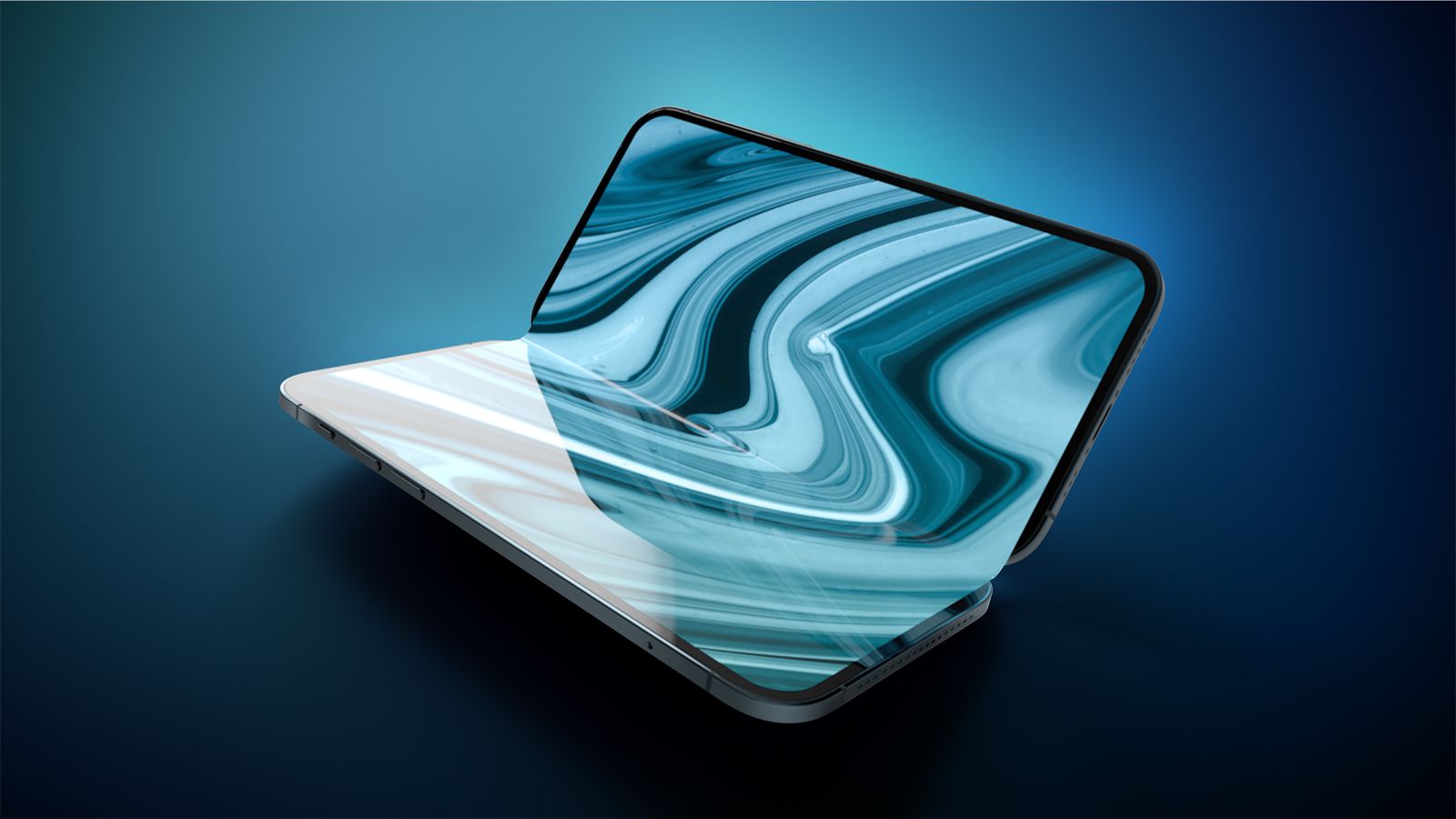
iPhone Duo: everyone watched the hinge, it is the screen that wears
The hinge takes the equivalent of three years of openings without weakening, but the screen crease goes from 48 to 167 microns in three months of simulated use. We put those numbers back on a human scale, round up the reviews, and look at the two figures Apple still refuses to publish.

Ever since the announcement, everyone had been watching the hinge. It was the wrong part. The first independent iPhone Duo tests came out this week, the device has been on sale since October 23, and they all say the same thing: the mechanism takes it without flinching, and it is the screen that wears. Here is what those tests actually measure, and what they cannot tell us.
1. First, what we are talking about
The figures doing the rounds are in microns, and that means nothing to most people. A micron is a thousandth of a millimetre. For scale: a sheet of paper is about a hundred microns thick, a hair somewhere between fifty and seventy. So we are deep into the very small, measured with a surface scanner rather than by eye.
Same goes for the folds. Testers quote tens of thousands of cycles, which means nothing until you tie it back to real use. At roughly thirty openings a day, which is already a lot, 3,000 folds works out at about three months, 10,000 folds a little under a year, and 30,000 folds around three years. That is the scale to keep in mind.
2. The hinge held up
It was the part everyone watched, and it is the one that fares best. Joanna Stern, of the Wall Street Journal, had a robot built called “Hingy” that folded the device on a loop for four nights: 32,640 folds, the equivalent of three years of use. At the end, the hinge takes slightly more force to open than on day one. So it stiffens rather than developing play, and she says she cannot feel it in normal use.
Tim Pan pushed in another direction: 10,000 machine folds, then 1,000 more in a freezer at −20 °C, to see whether cold changes anything. Same verdict on the mechanics, the 3D-printed titanium hinge keeps its original feel (Android Authority). Neither test broke anything.
3. The crease, however, deepens
This is where it gets interesting. HTX Studio scanned the panel's surface relief before and after 3,000 folds, or three months of simulated use (Notebookcheck):
- on a new device, the fold measures 48 microns deep. Thinner than a hair, so invisible in most lighting;
- after 3,000 folds, it reaches 167 microns. Two or three hairs stacked, or a sheet and a half of paper. At that point a finger catches it when sliding across the screen;
- rival foldables run through the same protocol land at the same level, one matching it, one slightly ahead;
- an older model, kept for comparison, measured 350 microns, more than twice as much.
Tim Pan reaches the same conclusion without measuring instruments: barely visible out of the box, the fold becomes plainly noticeable after 10,000 cycles, and the nano-texture finish no longer hides it (Digital Trends). Apple's phrase, “virtually imperceptible,” therefore applies to a new device. After that it fades, in much the same proportions as rivals.
One detail that matters here: Apple sells no protective film for the inner display, and has published no guidance on the subject (The Mac Observer).
4. What the reviews say
The full reviews, published on October 22, all land in roughly the same place: this is the most accomplished foldable on the market, and it is a first-generation product (9to5Mac). Tom's Guide calls it “the best designed foldable phone I've ever tested,” while regretting the missing telephoto at $2,000. CNET reckons Apple “appears to have stuck the landing,” before adding that “most people just don't need a phone that doubles as a tablet.”
The reservations are about the form factor and software maturity. The Verge sees “a first-gen device in every possible way,” expensive, occasionally irritating, but endearing the way early-adopter products are. Daring Fireball finds the outer screen too narrow and sums the whole thing up as an “extraordinarily polished prototype.” Wired and Joanna Stern would rather wait for the second generation, lighter, and most likely with Face ID and a telephoto lens.
5. The details you only see in daily use
Some things do not show up on a keynote stage. They surfaced in the first week of testing:
- the contactless antenna sits in one half only, which makes paying awkward with the device open;
- there is no internal earpiece: opening the phone mid-call switches audio to the speaker;
- under heavy use the surface climbs by about two degrees, mostly on the chip side;
- folding very slowly sometimes flips or blanks an interface element for a second;
- apps that have not been adapted still sit cramped on the large screen, something that should ease as updates land.
6. On the production side, what has changed
We already knew pre-orders went in minutes and that delivery dates ran to January 25 (see the stock shortage article). Two things are new since. First an industrial figure: the final assembly yield is said to be stuck slightly above 60% (36Kr). Put another way, close to four devices in ten are rejected at the end of the line, and it would take six months to a year to get back to a normal rate.
Second, the targets are moving. DigiTimes claims Apple has raised its twelve-month goal from 9.7 to 14 million units (Business Today), where other accounts described a more cautious increase in orders. Outside estimates for 2026 still sit around 6 million (AppleInsider). Apple confirms none of it.
7. What Apple still is not saying
A month and a half after the announcement, the tech specs still give no rated cycle count and no crease depth. Those are the only two numbers that would let anyone compare the Duo with its rivals on a common basis (as we already noted in September). The result: the only public data comes from YouTube.
So take it for what it is. No laboratory protocol, no raw data published, a single unit tested each time. That said, the three tests tell the same story, and it holds together: solid mechanics, a panel that marks over time, as everywhere else in the category.
The bottom line: of September's three unknowns, two now have an answer. The hinge takes the equivalent of three years of openings. The crease deepens with use until it meets the market average. As for demand, it far outstrips what Apple manages to build. That leaves the question accelerated testing cannot settle: the state of the screen after a year or two of pockets, dust and real temperatures. For that, we will have to wait for the first owners to report back.
Sources
- 9to5Mac – iPhone Duo reviews: the absolute best foldable phone, but not without compromise
- Android Authority – Durability tests reveal how the iPhone Duo handles thousands of continuous folds
- Digital Trends – Someone folded the iPhone Duo over 11,000 times
- Notebookcheck – iPhone Duo crease put to the test, revealing some interesting quirks
- 36Kr – iPhone Duo final assembly yield reaches only slightly over 60%
- Business Today – Apple's first foldable faces a demand surge, 14 million shipments now expected
- AppleInsider – iPhone Duo expected to sell six million units by end of 2026
- The Mac Observer – Can you put a screen protector on the iPhone Duo?
- Apple Newsroom – Apple unveils iPhone Duo